
Mysore sandalwood
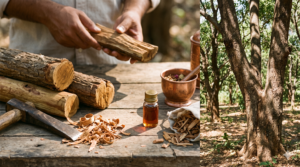
The Return of Mysore Sandalwood to Modern Niche Perfumery
The King of Woods Returns to the Olfactory Stage
In the history of fine fragrance, few botanical extracts command the reverence, mystical aura, and emotional resonance of true Mysore sandalwood. Known botanically as Santalum album and celebrated in ancient Sanskrit texts as Chandana, this precious aromatic heartwood from Karnataka in southern India set the benchmark for luxury across global perfume houses for more than a century.
For generations, genuine Mysore sandalwood served as the indispensable backbone of high perfumery. It was not merely a wood note; it was a miraculous fixative, possessing a soft, milky, balsamic warmth with meditative depth. From Guerlain’s historic creations to early 20th-century floral chypres, authentic Indian sandalwood held together fleeting florals, softened sharp citruses, and imparted an unforgettable drydown that could linger on silk for days.
Then, the golden age vanished. Overharvesting, illegal poaching, and severe supply depletion forced the Indian government to impose draconian export bans in the late 1990s and early 2000s. The fragrance world experienced a seismic shock. Legacy formulas were quietly reformulated, synthetic sandalwood aroma chemicals took over commercial formulas, and perfumers were forced to settle for sharper substitutes like Australian Santalum spicatum. For nearly two decades, authentic Mysore sandalwood became an elusive ghost—spoken of with nostalgic longing on fragrance forums and hoarded in vintage decants by die-hard collectors.
Today, an extraordinary renaissance is underway. Thanks to breakthrough ethical cultivation initiatives, regenerative forestry, legal Karnataka auctions, and the rising appetite for high-concentration artisanal creations, Mysore sandalwood is staging a triumphant comeback in modern niche perfumery.
In this comprehensive exploration, we delve into the cultural history, chemical mastery, market collapse, and modern revival of this sacred raw material—and why the return of true Santalum album is redefining contemporary luxury fragrance. Mysore sandalwood
1. What Makes Mysore Sandalwood the Gold Standard?
To understand why the perfume community mourned its absence, one must examine the intrinsic qualities of Mysore sandalwood compared to other woody raw materials.
Sandalwood is harvested from trees belonging to the genus Santalum. While there are over a dozen sandalwood species globally—including Santalum spicatum (native to Western Australia), Santalum austrocaledonicum (New Caledonia), and Santalum paniculatum (Hawaii)—none naturally match the chemical architecture of southern Indian Santalum album. Mysore sandalwood
The Olfactory Profile: Creamy, Velvety, and Sacred
True Mysore sandalwood is characterized by a profile that defies typical woody sharpness:
-
Milky & Lactonic: It carries an unctuous, rich creaminess reminiscent of sweet warm milk or melted butter.
-
Warm & Balsamic: Beneath the lactonic facets lies a deep, resinous sweetness that feels grounding, calming, and deeply comforting.
-
Zero Astringency: Unlike cedarwood (which can lean pencil-shaving or dry) or Australian spicatum (which leans green, medicinal, and resinously sharp), vintage Mysore sandalwood possesses no harsh edges.
-
Infinite Persistence: As an organic fixative, it binds to volatile top notes, slowing down the evaporation rate of light florals, herbs, and citruses without overpowering their delicate facets.
The Chemistry: Alpha and Beta-Santalols
The magic of Mysore sandalwood lies in two primary sesquiterpene alcohols: alpha-santalol and beta-santalol.
-
Alpha-Santalol: Responsible for the therapeutic, sedative, and calming effects long attributed to sandalwood in Ayurvedic healing traditions.
-
Beta-Santalol: The primary driver of the wood’s distinctive, diffusive, milky-sweet olfactory character.
In high-grade Indian Mysore sandalwood, total santalol concentrations routinely exceed 70% to 90%. By contrast, non-album species often yield significantly lower santalol levels, offset by higher percentages of farnesol and curcumene, which impart sharper, harsher, and drier aromas. This unique biochemical signature is why perfumers have always viewed Santalum album as peerless.
2. The Tragedy of Overexploitation: How a Legend Disappeared
The story of how Mysore sandalwood vanished from mainstream perfumery is a cautionary tale of resource exhaustion, geopolitical strife, and regulatory intervention.
The Royal Monopoly and the “Sandalwood Smuggling” Era
Historically, the Kingdom of Mysore deemed sandalwood a royal tree. In 1792, Tipu Sultan declared sandalwood an exclusive state monopoly, making it illegal for private individuals to harvest or sell the timber. Following Indian independence, state forest departments maintained strict control over the resource.
However, as global demand surged throughout the 1970s and 1980s, black-market poaching reached crisis levels. The trade became synonymous with organized crime, most notably spearheaded by the notorious poacher Veerappan, who systematically decimated protected reserves across Karnataka and Tamil Nadu. The illegal harvesting felled immature trees before they had time to develop the precious, oil-dense heartwood (which takes anywhere from 25 to 50 years to mature).
The Government Ban and the Reformulation Crisis : The Return of Mysore Sandalwood to Modern Niche Perfumery
By the late 1990s, the wild population of Santalum album in India had reached critical vulnerability. The International Union for Conservation of Nature (IUCN) classified the species as threatened, and the Indian government imposed strict export quotas and near-total bans on the raw log and essential oil trade.
The consequences for the global fragrance industry were catastrophic:
-
The Great Reformulation Wave: Legendary fragrances that relied on Mysore sandalwood—such as Guerlain’s Samsara, Chanel’s Bois des Îles, and Creed’s Bois de Santal—underwent aggressive ingredient reformulations.
-
The Rise of Synthetics: Fragrance chemists engineered synthetic aroma chemicals to emulate the milky sandalwood profile. Molecules like Javanol, Polysantol, Ebanol, and Sandalore were widely integrated into commercial formulas. While these molecules boast impressive longevity, perfume purists argue they lack the multi-dimensional, living soul of natural sandalwood oil.
-
The Turn to Australian Sandalwood: Commercial brands turned to Australian Santalum spicatum. While ecologically sustainable, spicatum has a radically different olfactory character—much drier, woodier, and smokier—lacking the rich, buttery roundness characteristic of Mysore.
3. The New Dawn: How Mysore Sandalwood Is Making Its Return
The re-emergence of Mysore sandalwood in modern niche perfumery is not an accident. It is the deliberate result of two converging factors: pioneering sustainable agronomy and the evolution of the niche perfume consumer.
1. Sustainable Domestic Policy and Legal Karnataka Auctions
Recognizing that total state monopolization had inadvertently fueled the black market and discouraged commercial farming, the Indian government amended forestry laws. Landowners in Karnataka and Tamil Nadu were finally granted legal permission to plant, grow, and own sandalwood trees on private agricultural land.
Today, state-owned enterprises—such as the Karnataka Soaps and Detergents Limited (KSDL), famous for Mysore Sandal Soap—along with licensed government distilleries, operate tightly monitored, traceable public auctions. Through rigorous microchip tagging, forestry audits, and direct supply lines, high-grade, legally compliant Indian Mysore sandalwood is once again flowing into legitimate perfume labs.
2. The Australian Plantation Revolution
In parallel with Indian forestry reforms, visionary agronomists executed one of the most ambitious horticultural endeavors in modern aromatic history. Recognizing the climatic suitability of the Ord River Valley in tropical Western Australia, forestry companies imported genuine Indian Santalum album seeds during the late 1990s and early 2000s.
Because sandalwood is a hemi-parasite—meaning its roots must graft onto host plants to extract water and nutrients—establishing plantation-grown Santalum album required building diverse, multi-tiered host ecosystems. After more than two decades of careful husbandry, these vast, ethically managed plantations reached biological maturity.
Today, sustainably grown Santalum album (often marketed as “Tropical Album” or plantation-grown Indian sandalwood) is harvested, distilled, and supplied to artisanal and niche perfumers with full transparency, ethical labor guarantees, and carbon-conscious certification.
4. Mysore Sandalwood vs. Substitutes: An Olfactory Comparison
To understand the artistic value that Mysore sandalwood brings to modern niche perfumery, consider how it stacks up against alternative materials in the fragrance creator’s palette:
| Sandalwood Source / Material | Botanical / Chemical Origin | Key Odor Descriptors | Longevity & Projection | Primary Role in Modern Niche Perfumery |
| Indian Mysore Sandalwood | Santalum album (Karnataka, India) | Deeply milky, sweet, balsamic, buttery, spiritual, warm | Exceptional fixative; 12–24+ hours on skin; intimate, soft projection | Artisanal attars, ultra-luxe extraits, heritage recreations |
| Australian Album | Santalum album (Grown in Western Australia) | Creamy, woody, slightly brighter and cleaner than wild Indian wood | Excellent durability; 10–16 hours; balanced modern sillage | Sustainable luxury niche perfumes, eco-conscious luxury brands |
| Australian Spicatum | Santalum spicatum (Indigenous to Australia) | Dry, earthy, resinous, aromatic, crisp, slightly medicinal | Moderate to high; projects with a sharper woody edge | Modern fresh scents, masculine aromatic fougères, leathery accords |
| New Caledonian Sandalwood | Santalum austrocaledonicum | Nutty, smoky, woody, warm, lightly sweet | Solid longevity; 8–12 hours; robust heart presence | Oriental compositions, floral-woody hybrids, amber bases |
| Synthetic Sandalwood (Javanol/Polysantol) | Pure synthetic molecules | Radiantly transparent, metallic, creamy-woody, slightly cedar-like | Massive sillage; lingering presence across multiple days | Commercial designer perfumes, minimalist molecular fragrances |
While modern synthetics like Javanol provide incredible diffusion and Australian spicatum delivers excellent dry woods, neither achieves the seamless, skin-like sensuality of true Mysore sandalwood. Its return provides niche creators with an unmatched tool for emotional depth and textural complexity.
5. Why Modern Niche Perfumery Is Embracing the Revival
The modern luxury fragrance market has experienced a radical paradigm shift over the past decade. Mass-market designer fragrances, dominated by generic sweet gourmands and high-octane ambroxan bombs, have caused widespread scent fatigue among discerning fragrance enthusiasts.
In response, educated consumers have gravitated toward modern niche perfumery and independent artisanal creators who prioritize transparency, rare natural materials, and craftsmanship over mass-market commercial testing.
       [Discerning Fragrance Lovers]
                     │
                     ▼ (Seeking depth & authentic ingredients)
       [Modern Niche Perfumery Renaissance]
         ├── Artisanal Extraits & Attars (Pure Mysore oil)
         ├── Certified Sustainable Plantations (Australian Album)
         └── Transparent Sourcing & Olfactory Storytelling
The Allure of Natural Imperfection
Niche perfume enthusiasts appreciate that natural botanicals evolve on the skin throughout the day. Mysore sandalwood behaves like an organic, living accord. When applied, it does not blast the senses; rather, it responds to the wearer’s body heat, subtly mutating and radiating a velvety warmth that feels like a natural extension of one’s own skin chemistry.
The Rebirth of the Artisanal Attar Movement
One of the most exciting developments in modern fragrance is the global revival of the attar—traditional oil-based perfumery concentrated without denatured alcohol.
Historically, Kannauj (the perfume capital of India) relied on true Mysore sandalwood as the base oil (carrier) for hydro-distilled floral extraits, including Gulab (Rose), Motia (Jasmine Sambac), and Mitti (baked earth). Artisanal indie perfumers are once again crafting micro-batch attars and concentrated extraits using legally obtained Mysore sandalwood, introducing a whole new generation of international collectors to this ancient art form.
Sourcing Transparency as the Ultimate Luxury
In contemporary luxury, exclusivity is no longer defined merely by a gold-plated cap or a high price tag. True luxury is defined by provenance, ethical harvesting, and rarity. Modern fragrance consumers demand to know where their raw materials originate. Brands that can point to verified, sustainable plantations of Santalum album or certified legal harvests from Indian reserves command profound respect and commercial loyalty.
6. How Modern Perfumers Formulate with Mysore Sandalwood
When master perfumers formulate with authentic Mysore sandalwood, they do not treat it as an ordinary base note. Because of its high price point and distinct chemical architecture, it requires deliberate artistic pairing.
1. The Classic Rose-Sandalwood Marriage
The pairing of Damask rose and Mysore sandalwood is one of the oldest accords in human history. Rose brings dewy, citrus-tinged floral vibrancy, while the sandalwood provides a soft, unctuous landing cushion that rounds out the sharp green thorns of the rose. In modern niche perfumery, this relationship is being reimagined with modern twists—adding pink pepper, metallic saffron, or dry frankincense to update the timeless profile.
2. The Creamy Iris and Orris Fusion
Orris butter—distilled from the rhizomes of the Iris pallida plant—is one of the few natural ingredients that rivals sandalwood in cost. When combined, the powdery, violet-like, starchy elegance of orris melts directly into the lactonic creaminess of Mysore sandalwood. The result is an aristocratic, suede-like texture that defines the pinnacle of modern luxury fragrance.
3. High-Contrast Woody-Chypre Compositions
Progressive indie perfumers are utilizing Mysore sandalwood to ground sharp, architectural chypres. By juxtaposing bitter bergamot, dark oakmoss, and pungent patchouli against a smooth, balsamic Santalum album drydown, they achieve a striking equilibrium: vintage sophistication married to modern edge.
7. The Consumer’s Guide: Identifying Authentic Mysore Sandalwood
Because authentic sandalwood oil remains one of the most adulterated natural materials in the world, fragrance lovers must exercise critical discernment when investing in sandalwood perfumes.
Red Flags to Watch For
-
Suspiciously Low Prices: Pure, aged Mysore sandalwood oil costs several thousand dollars per kilogram. If a 50ml bottle claiming to contain pure natural Indian sandalwood retails for under $80, it is almost certainly formulated with synthetic substitutes (such as polycyclic wood aromachemicals) or diluted with cheap carrier oils.
-
Harsh, Screechy Top Notes: If a “sandalwood” fragrance immediately smells like pencil shavings, sawdust, or harsh industrial solvent, you are likely smelling low-grade cedar substitutes or cheap synthetic boosters rather than genuine Santalum album.
-
Vague Labeling: Beware of marketing copy that simply lists “oriental woods” or “sandalwood accord” without specifying botanical lineage or ethical provenance.
Signs of Authentic, Quality Scent Crafting
-
Botanical Transparency: Reputable niche houses proudly declare their sourcing, identifying Santalum album and specifying whether the oil hails from Karnataka, India, or ethical plantations in Australia.
-
Textural Evolution: Authentic sandalwood reveals its true beauty slowly. The opening may seem subtle, but after an hour on the skin, it blossoms into a warm, creamy aura that becomes more profound as your body temperature rises.
-
Batch Numbering & Limited Runs: Because of legal harvesting quotas, niche fragrances utilizing genuine sandalwood are frequently released in small, numbered batches or limited editions.
Conclusion: The Enduring Legacy of the Sacred Wood
The narrative of Mysore sandalwood is a story of survival, stewardship, and artistic resurrection. From its ancient roots in sacred Vedic rituals to its near-tragic eradication at the close of the 20th century, this golden wood has weathered unprecedented trials.
Its triumphant return to modern niche perfumery signifies more than just the recovery of a beloved fragrance note. It represents a collective victory for sustainable agriculture, ethical sourcing, and artistic integrity. By marrying centuries-old distillation reverence with modern ecological practices, the fragrance industry has ensured that this peerless treasure from Karnataka will continue to scent generations to come.
For the true perfume aficionado, wearing authentic Mysore sandalwood is an intimate sensory luxury. It is a tangible connection to perfume’s golden age—a timeless, meditative reminder that true beauty, anchored in patience and respect for nature, always finds its way back.
Key Takeaways for Fragrance Enthusiasts
-
The Unmatched Standard: Mysore sandalwood (Santalum album) remains the undisputed gold standard of woody perfumery due to its exceptionally high alpha- and beta-santalol content, imparting an irreplaceable creamy and lactonic finish.
-
Why It Disappeared: Intensive overharvesting and rampant poaching in southern India led to critical depletion and strict governmental bans around the turn of the 21st century.
-
How It Returned: The combination of regulated legal auctions in Karnataka and sustainable Santalum album plantations in Western Australia has revived ethical access for boutique and niche houses.
-
The Artisanal Advantage: Independent niche perfumery has driven the resurgence, utilizing authentic sandalwood in high-concentration extraits and traditional attars.